

Ask AI to summarise this article


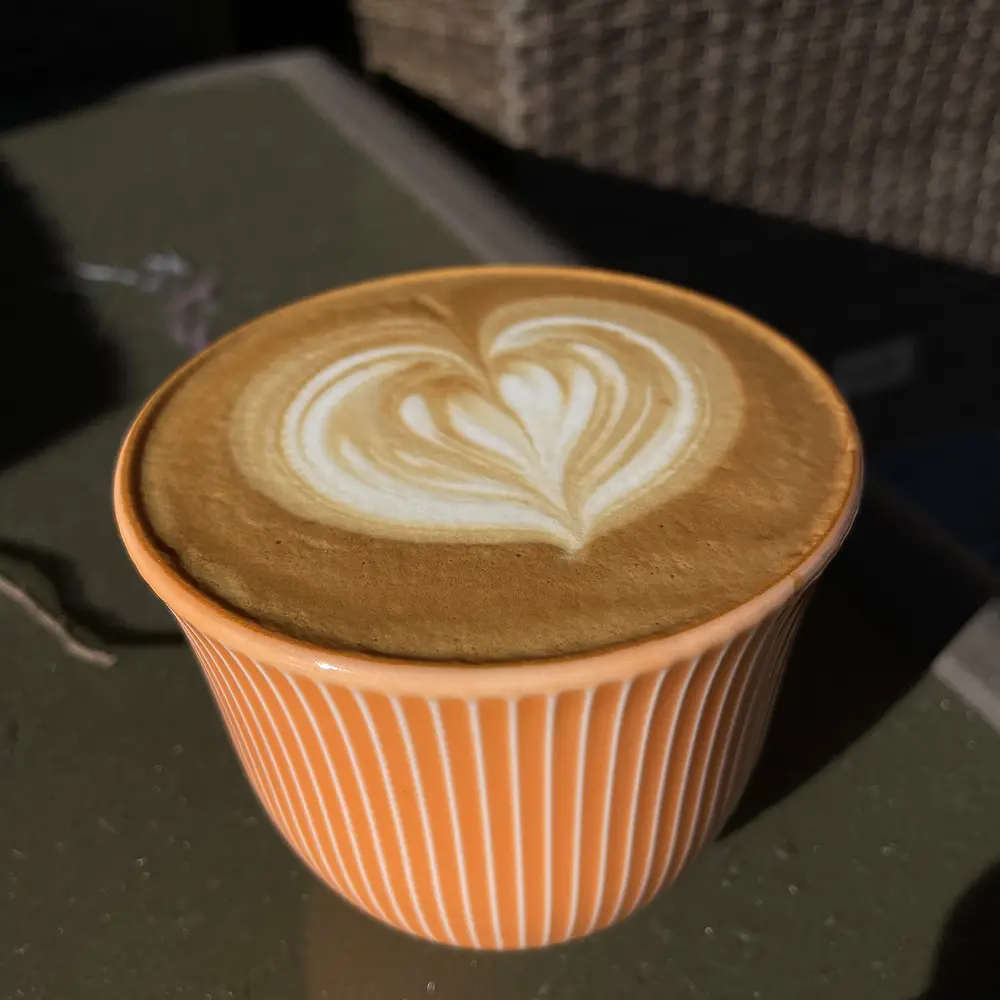
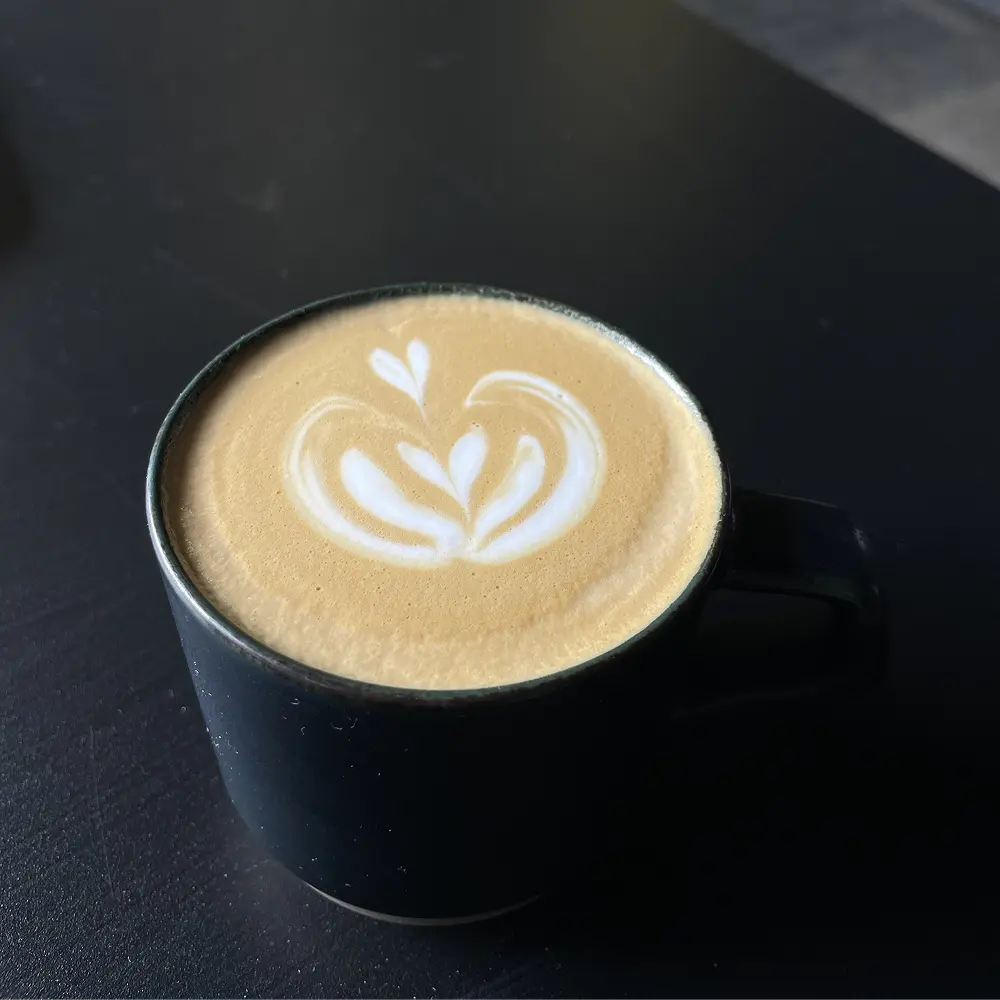
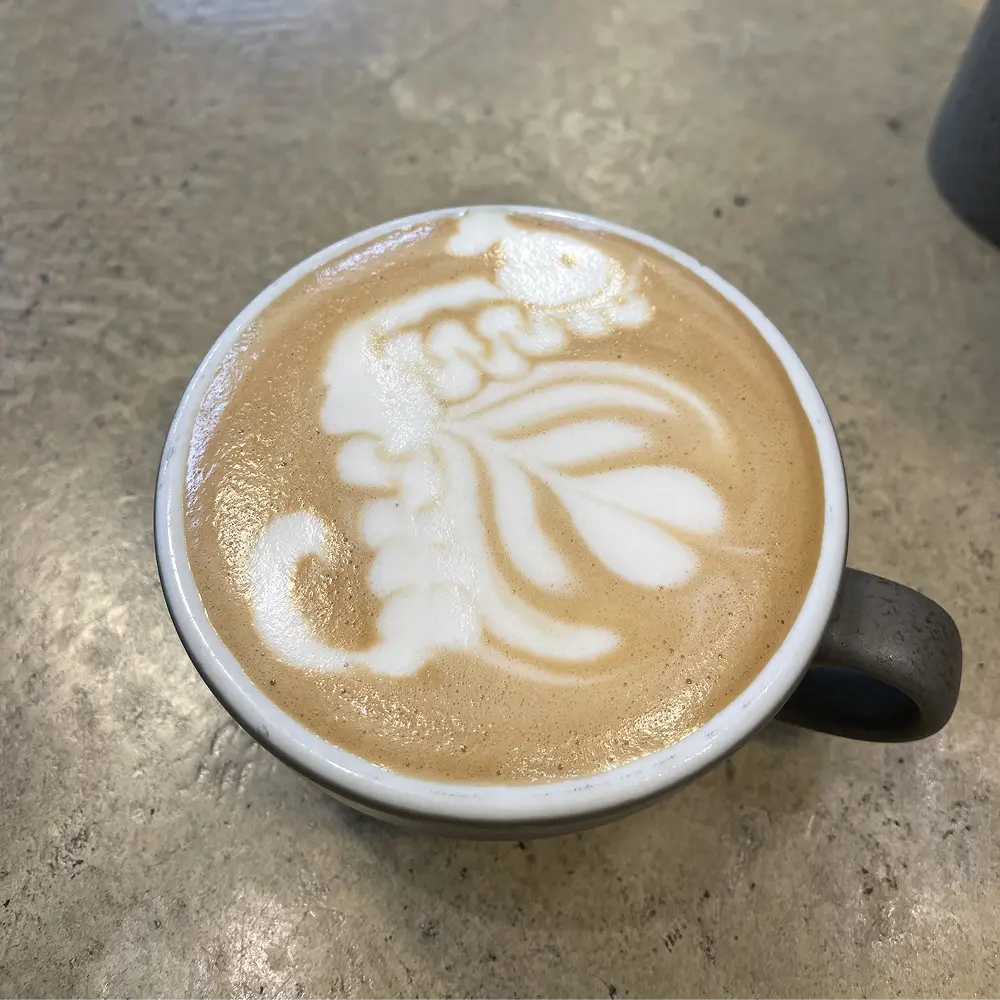
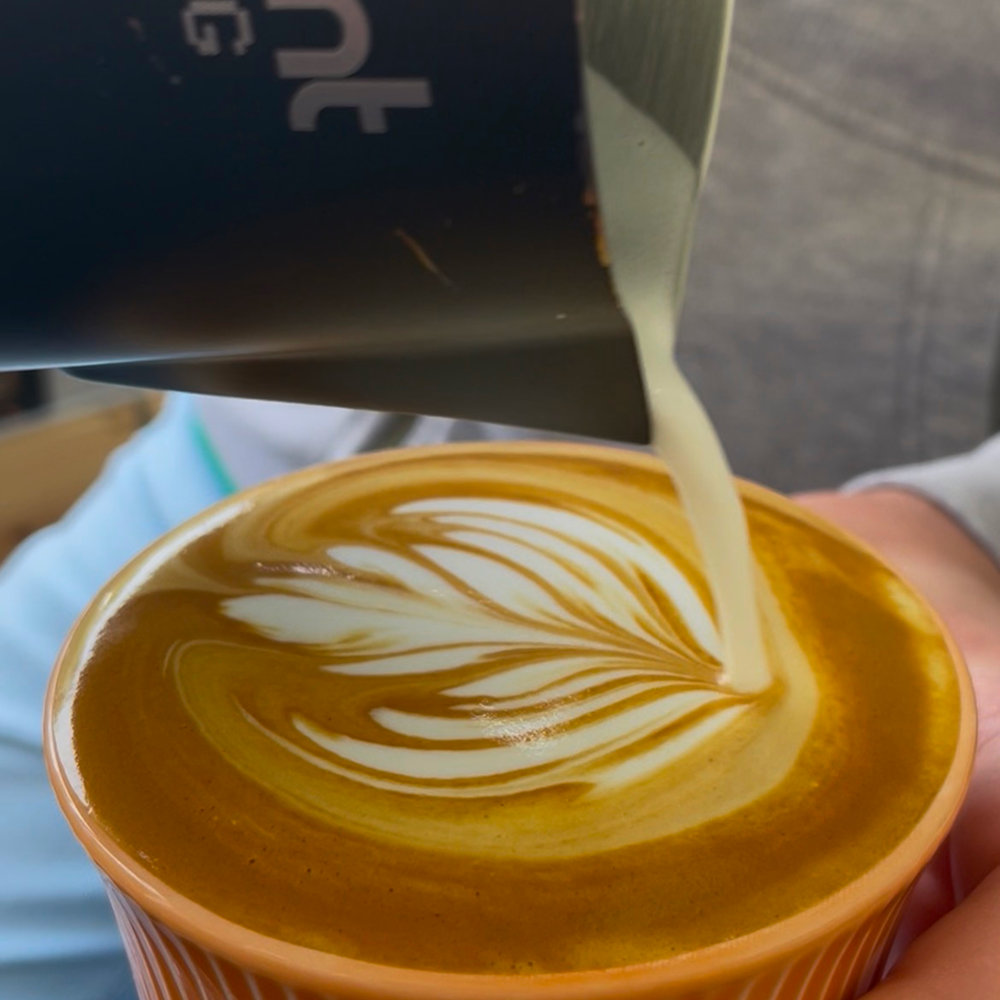
We've all stood there watching a barista turn our flat white into a tiny work of art. Pretty to look at, sure. But does that swan or rosetta actually make the coffee taste better, or is our brain just being shallow?
Turns out the answer is more interesting than you'd think.
Your Brain on Latte Art
When we drink coffee, what we perceive as "flavour" isn't just happening in our taste buds. It's a complex neural process involving all our senses, what scientists call "crossmodal perception."Hsu and Chen's groundbreaking study, published in the British Food Journal, offers compelling evidence that our brain processes coffee differently when it's adorned with latte art. Using electroencephalography (EEG), they measured the brainwave patterns of 70 participants drinking identical coffee, sometimes with latte art, sometimes without.The results were that coffee with latte art triggered significantly lower alpha bands (associated with relaxation) and higher beta bands (associated with alertness and concentration). Most remarkably, participants consistently reported that coffee with latte art tasted sweeter, and Bayesian statistical analysis confirmed that these weren't random perceptions.
Translation for coffee nerds: The visual appeal of latte art literally changes our brain's electrical activity, enhancing alertness and making our coffee taste perceptibly sweeter without adding a grain of sugar.
The Microfoam Factor
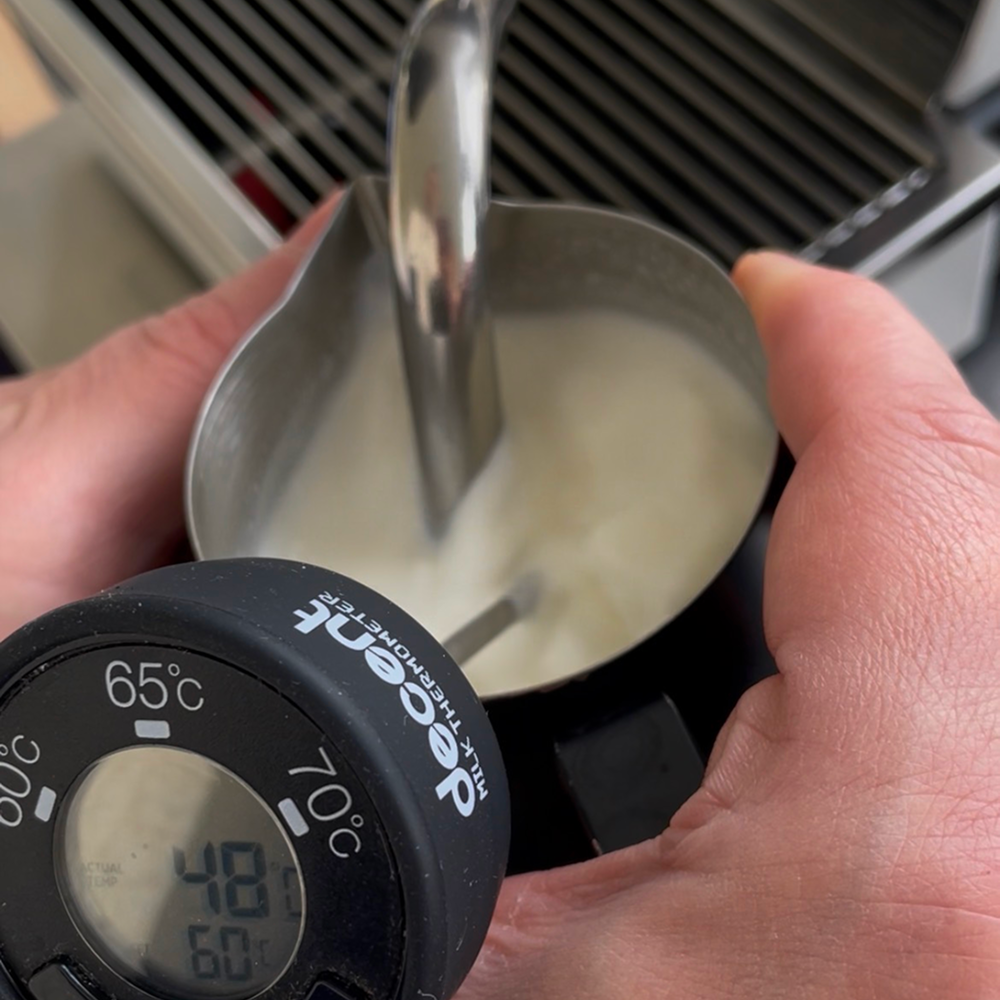
Before you write off latte art as pure visual trickery, there's a physical side to this. Proper latte art requires properly prepared microfoam, which genuinely affects how coffee tastes:
- Texture Transformation: That velvety mouthfeel from well-crafted microfoam isn't an illusion; it physically changes how coffee compounds disperse across your palate.
- Aromatic Delivery: Those fine bubbles in quality microfoam act as vehicles for volatile aromatic compounds, effectively pre-releasing them before they hit your taste buds. This changes not just how your coffee smells, but how it tastes through retronasal olfaction.
- Flavour Integration: Well-integrated microfoam creates a more gradual transition between coffee and milk components, physically altering how flavour compounds interact on our palate.
The Crema Controversy
If you've ever had a heated debate about whether to stir your cappuccino, you're participating in a legitimate controversy. Some baristas argue that latte art techniques create a "ring of crema" around the edges of the drink, which can deliver an overpowering initial taste.This intense first contact might actually "shock" our palate, reducing our sensitivity to subtler notes that follow. Some suggest stirring or swirling our cup to evenly distribute the crema throughout the drink, which might create a more balanced flavour profile. This notion might horrify latte art purists.
Cup Shape Matters More Than You'd Think
For coffee nerds seeking evidence beyond anecdotes, Fabiana M. Carvalho's and Charles Spencer's research at the University of São Paulo provides some of the most compelling scientific validation for what many baristas have long suspected.
In her large-sample study with 276 participants (both amateurs and professionals) at a speciality coffee event in Brazil, Carvalho meticulously tested how cup shape affects perception using identical speciality coffee in three distinctly shaped cups from the Oslo series designed by renowned coffee expert Tim Wendelboe:
- Tulip shape: A narrower opening above a wider base
- Open shape: A straightforward, wide-mouthed cup
- Split shape: A distinctive hourglass design with an indented waist
Using multivariate analysis of variance, Carvalho found that both amateur and professional coffee drinkers experienced significant differences in their perception of the same coffee:
- The tulip-shaped cup significantly enhanced perceived aroma intensity compared to other shapes.
- The split cup intensified both the sweetness and acidity ratings.
- Amateur coffee drinkers gave significantly lower liking scores to coffee from the split cup, while professionals showed no such aversion.
As Carvalho explains in her published findings, these effects stem from both physical and psychological mechanisms. The tulip cup's higher ratio of maximum diameter to opening diameter physically traps aromatic compounds, as with wine glasses. This creates a more concentrated headspace of volatile compounds that we experience when bringing the cup to our lips.
Meanwhile, the split cup's enhanced sweetness perception likely results from what sensory scientists call "crossmodal correspondence", our brain's tendency to associate certain shapes with specific taste qualities. The roundness of the split cup triggers our brain's well-documented association between rounded shapes and sweetness perception.
What makes Carvalho's research particularly useful is that it tested real coffee drinkers in a natural environment rather than in a lab. Her findings suggest that café owners and baristas aren't just being pretentious when they select specific cups; they're harnessing genuine perceptual mechanisms that can highlight specific flavour attributes of different coffees.
The Complete Cup Experience
While latte art gets the spotlight, your cup quietly influences your coffee experience.
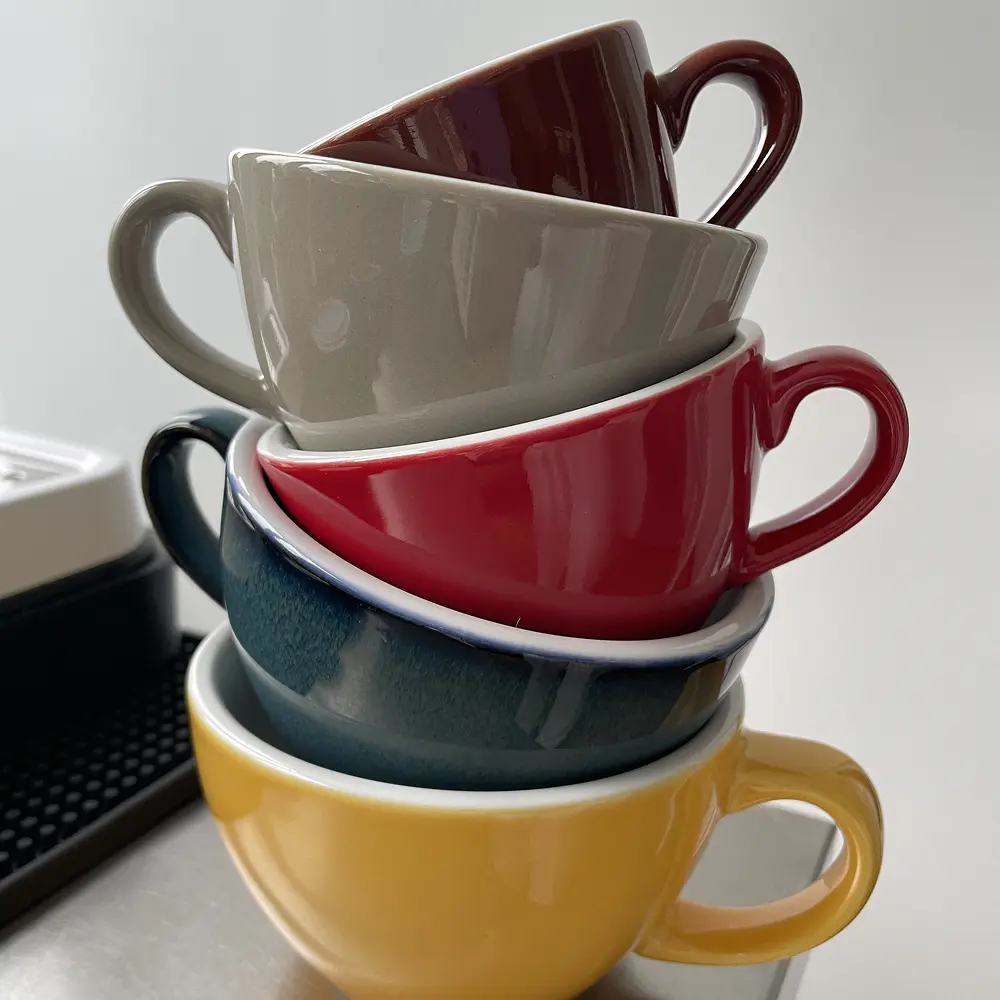
Cup Colour
George Van Doorn and colleagues at Monash University discovered that "the colour of the mug does influence the perceived taste/flavour of coffee." Their research, found that:
- White mugs enhance the perceived intensity of coffee flavour compared to transparent mugs
- Coffee was rated as less sweet in white mugs compared to transparent or blue mugs
- These effects likely stem from the colour contrast between the dark coffee and its container
This phenomenon works through a combination of visual contrast and psychological expectation. The white background amplifies the perceived darkness of the coffee, which our brains associate with intensity and bitterness. Meanwhile, blue and transparent vessels create different contrast effects that influence perceived sweetness.
Cup Texture
That perfectly smooth porcelain or artisanal ceramic mug isn't just about style; it's influencing our taste perception through touch:
- Studies show that certified Q-graders (professional coffee tasters) perceived coffee as more acidic when drinking from cups with rough textures.
- Consumers consistently perceive coffee as sweeter when drinking from smooth-textured cups.
- These tactile influences occur through what researchers call "sensation transference," where qualities of one sensory experience transfer to another.
The texture effect extends beyond the cup's exterior; even the thickness and shape of the rim affect how liquid flows onto your palate, influencing the distribution of coffee across different taste receptors on your tongue.
Cup Shape (Again)
Van Doorn's cross-cultural research with participants from China, Colombia, and the UK found remarkable consistency in how people associate cup shapes with flavour expectations:
- Narrower mugs create expectations of more aromatic coffee across all cultural backgrounds
- Shorter mugs generate expectations of more bitter and intense coffee
- Rounder, more curved cups are associated with expectations of sweetness
- Angular cups create expectations of bitterness and acidity
These aren't merely subjective associations; they're robust crossmodal correspondences that activate even before you take your first sip, setting expectations that influence what we ultimately perceive.
For coffee nerds, our vessel choice can be as crucial as bean selection or brewing method in highlighting specific qualities of your coffee. A bright, acidic Ethiopian Yirgacheffe might shine in a tulip-shaped vessel with a rough texture. At the same time, a chocolatey Brazilian might benefit from a smooth, rounded cup that enhances perceived sweetness.
So Is Your Palate Just Making Things Up?
The science suggests a humbling possibility: our perception of coffee quality is influenced by factors beyond what's actually in our cup. The visual appeal of latte art, the shape of your vessel, and even its colour and texture are silently shaping our sensory experience.This doesn't mean our coffee preferences aren't "real." Rather, it means that taste is far more complex and integrative than most of us realise. Our brain isn't being "fooled" by latte art; it's responding to it as part of a legitimate multisensory experience that includes, but isn't limited to, the chemical compounds in our drink.So the next time you find yourself debating whether to disturb that perfect rosetta or analysing the merits of your new ceramic mug, remember: these aren't just aesthetic considerations; they're part of the complete coffee experience that defines what you taste.
Your brain isn't playing tricks on you. It's just experiencing coffee the way it was meant to be: through all your senses at once.